

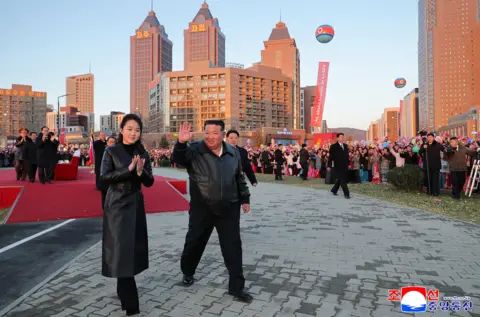
During threats towards South Korea and vows to expand the nuclear weapons arsenal, a central uncertainty hovered at the ongoing key meeting: could the leader's teenage daughter be named as the successor?
Even though unquestionable news did not emerge during the congress, it has ignited a intense discussion about the young girl's potential as the prospective leader of the 25 million country, a dictatorship solely ruled by the Kim family clan.
Growing Public Profile and Speculation
The girl has become progressively prominent in official broadcasts alongside her parent. Yet, much about her remains shrouded in mystery. Pyongyang has never officially disclosed her full name or verified her date of birth.
She was first revealed internationally in 2013. Since then, she is commonly thought to be a teenager, in part on intelligence estimates.
Signs of Future Leadership
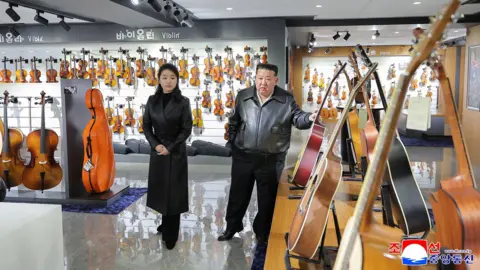
Experts note several notable indicators. Her frequent public sightings—often framed in the frame—and the use of reverential language usually set aside for the ruler are seen as strong evidence.
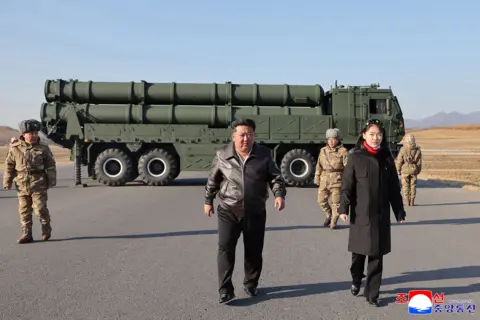
Additionally, her close association with the army is viewed a further important element. She has inspected soldiers and missiles alongside her father. On several occasions, senior generals have been observed stopping next to her to confer during military displays.
"Official broadcasts is using words exclusively used for the supreme leader. It underlines her own iconic image," notes one prominent analyst.
This military familiarization is considered essential, as ultimate authority in North Korea resides with dominance over the armed forces. To be a effective successor, she must appear as a competent leader.
Discussion Over Gender and Culture
However, a significant counter-argument exists. Some analysts believe that North Korea's inherently patriarchal culture presents an major obstacle for a female ruler.
It is noted that women at all level find it hard for equitable treatment. Female commanders in high offices are very uncommon. Widespread superstitions also demonstrate these biases.
"In such cases, they finish the ride then go to the rear of their car and expectorate thrice to dispel the misfortune," explains a ex- DPRK insider.
Changing Social Realities
Alternatively, other researchers contend that the status of women in North Korea has transformed dramatically since the 1990s.
Amid that period, as the official system collapsed, women increasingly became the key providers, pursuing black market business. This has apparently led to a gradual transformation in societal roles.
One researcher who has studied many former residents states that it is now no longer uncommon to see women in managerial positions within the regime.

"It is wrong to think of North Korea with our logic. We must consider them as the ancient kingdom," comments the analyst. "Who would have the audacity to defy a person of royal blood who is taking the supreme position?"
Political Maneuvers
Current political developments are also being watched. The promotion of Kim Yo Jong, the leader's powerful sibling, to a key ideological position is seen by some as a step to install a guardian for the possible heir.
Finally, analysts are in disagreement. Some view the focus on Ju Ae as a calculated tactic to humanize the leader's image and normalize another dynastic transfer of power. Others believe the signals of her grooming are sufficiently substantial to dismiss.
Either way, the debate in and of itself may fulfill a goal for the Pyongyang, keeping outside attention firmly locked on the isolated Kim family leadership.


